Gait Analysis at Home: How 22 Sensors in Your Slides Replace a $10,000 Lab
A clinical gait analysis costs between $500 and $2,000 per session. It requires force plates embedded in the floor, a multi-camera motion capture system, specialized software, and a trained biomechanist to interpret the results. You get a single snapshot of how you walk on one particular day in an artificial lab environment.
PLANTR gives you continuous gait data every day, in your actual life, for the cost of a pair of slides.
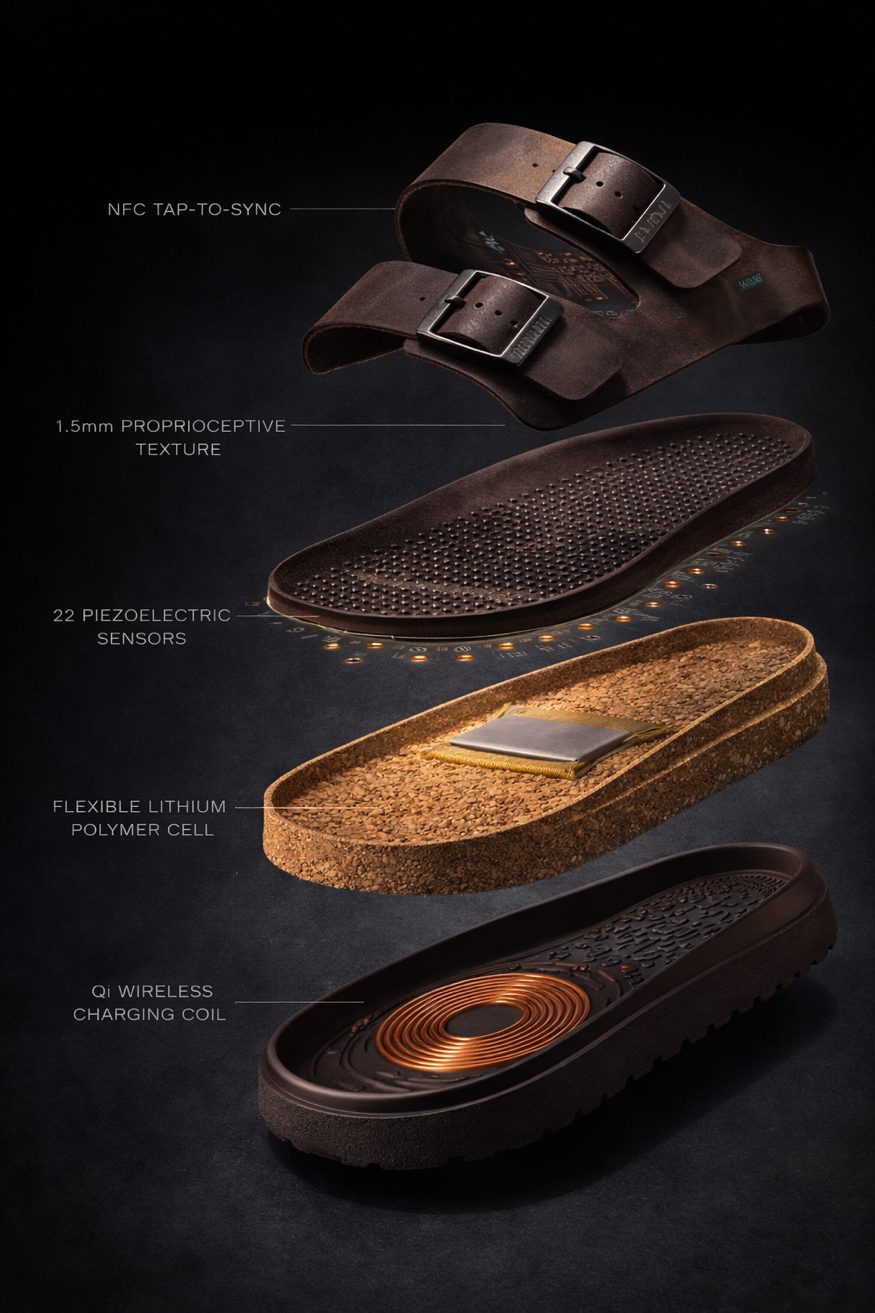
What the Sensors Capture
The 22 piezoelectric pressure sensors in each PLANTR slide are arranged across four zones that correspond to the major functional regions of the foot: heel, lateral midfoot, medial forefoot, and toe line. During every step you take, these sensors capture:
- Pressure distribution — where your weight is concentrated across the foot
- Temporal patterns — the timing of heel strike, midstance, and toe-off
- Symmetry — whether your left and right foot produce mirror-image gait patterns
- Anomalies — deviations from your baseline that may indicate fatigue, compensation, or early injury
Why Continuous Beats Clinical
A lab gait analysis tells you how you walked during one controlled session. PLANTR tells you how you walk every day — after a hard workout, when you are tired, when you are stressed, after travel, after an injury. The longitudinal data is orders of magnitude more valuable than a single snapshot because it reveals trends, not moments.
The PLANTR app uses machine learning models trained on over 180,000 gait cycles to classify patterns and flag anomalies. If your gait symmetry degrades by more than a threshold amount, or your pressure distribution shifts in a way that correlates with common injury patterns, the app alerts you before you feel pain.

The best gait analysis is not the most expensive one. It is the one that runs every single day, in your real life, without you having to think about it.