Why Your Kids Should Be Barefoot as Much as Possible: A Parent's Guide to Foot Development
We obsess over the right car seat, the right crib mattress, the right pediatrician. But when it comes to our children's feet — the foundation of their entire physical development — most parents make one critical mistake: they put shoes on too early and too often.
The Research Is Clear
A large-scale study comparing habitually barefoot children with habitually shod children found that barefoot children had significantly wider feet, more flexible arches, stronger intrinsic foot muscles, and better balance scores. The barefoot children's feet were, by every measurable metric, healthier.
Children's feet are mostly cartilage until age 5-6, and don't fully ossify (harden into bone) until around age 18. During these critical years, the shape and strength of the foot is being determined by how it's used. Shoes that constrict, elevate, or cushion the foot during this window can permanently alter foot structure.
What Happens When Kids Go Barefoot
Toes Splay Naturally
Without shoes, children's toes fan out wide with every step. This natural splay provides a broader base of support, better balance, and stronger push-off. Shoes — especially those with narrow toe boxes — train toes to point inward instead.
Arches Develop Properly
The foot's arch is not a passive structure — it's a dynamic spring that develops through use. Barefoot walking on varied surfaces strengthens the muscles that support the arch. Supportive shoes and arch supports can actually prevent the arch from developing independently.
Sensory Development Accelerates
The peak window of neuroplasticity for the somatosensory system is birth through age 4. Barefoot contact with varied surfaces during this window builds the neural pathways that will govern balance, coordination, and body awareness for life. You can't get those years back.
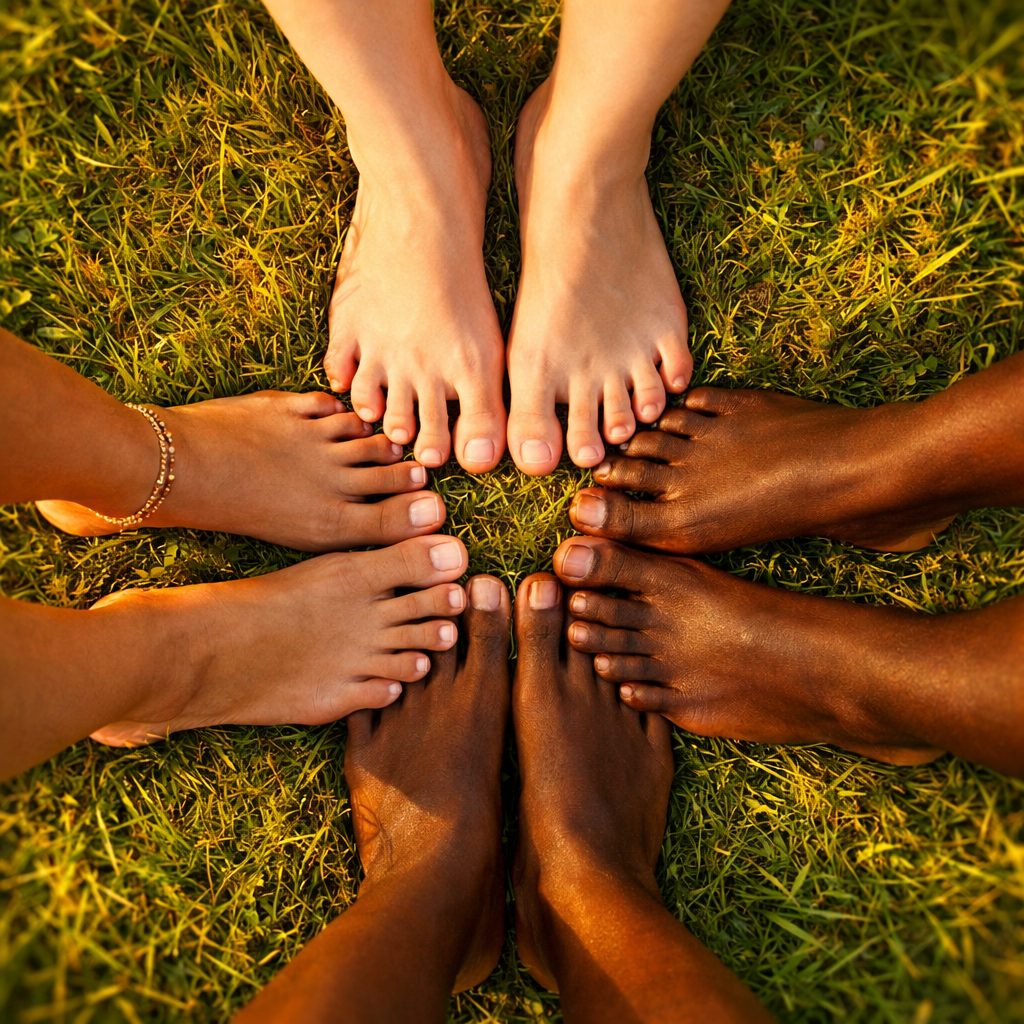
Practical Guidelines for Parents
- At home: Always barefoot. No socks, no slippers (unless cold). Let them feel every surface.
- Outside on safe surfaces: Barefoot whenever possible. Grass, sand, smooth paths.
- When shoes are required: Choose the widest, thinnest, most flexible shoes available. No arch support. No heel elevation. No narrow toe boxes.
- Let them climb, jump, and balance barefoot. Playground equipment, rocks, logs — these are the gym for their developing feet.
The best shoes for your child's foot development are no shoes at all. Every hour spent barefoot is an investment in a lifetime of strong, healthy, capable feet.